• About
    • Topics

Megs Topic

  • Imagining Sprixa: Market Research, Strategic Fit, and Limitations for a PepsiCo Concept

    April 11th, 2025

    As part of my strategic exploration for a potential new product launch under PepsiCo, I developed the concept of Sprixa: A sparkling Tea Mocktail, which is a functional, ready-to-drink (RTD) tea that blends wellness, sustainability, and modern lifestyle appeal. The idea came from observing shifting consumer behaviors and growing demand for beverages that offer more than just refreshment. To ensure Sprixa could viably fit into PepsiCo’s offerings and resonate with today’s market, I conducted thorough marketing research.

    Market Research and PepsiCo’s Strategic Alignment

    Sprixa was designed with PepsiCo’s mission in mind, “Winning with Purpose”, which prioritizes sustainable growth and innovation in response to evolving consumer needs (PepsiCo, 2024). Through market research, it became clear that PepsiCo has already been expanding its portfolio with healthier alternatives, such as LIFEWTR and Pure Leaf, to keep pace with rising wellness trends. Sprixa would complement this with its functional benefits (think: hydration, antioxidants, and stress relief) and eco-friendly packaging, as a natural evolution of PepsiCo.

    To validate the concept, I explored both primary and secondary research. While my primary research plan involves future surveys and focus groups for granular insight, my secondary sources (from Mintel, IBISWorld, and industry reports) helped paint a solid picture of today’s consumer landscape. Findings show that both Millennials and Gen Z are actively seeking functional, low-sugar alternatives to sodas and alcoholic beverages (Mintel, 2024; Riebe, 2024). They value clean labels, ethical sourcing, and sustainable packaging, all of which Sprixa would embody.
    Industry Trends and Future Implications

    The non-alcoholic and functional beverage industry is not just growing; it’s booming. The RTD tea segment alone is expected to exceed $75 billion by the end of 2025, with a CAGR of 1.6% through 2029 (Irigoyen, 2025; Rose, 2024). This upward trend signals a strong opportunity for Sprixa, especially as consumers lean toward beverages that align with both wellness goals and conscious consumption.

    However, trends can pivot. One plausible shift could be the increased personalization of wellness beverages, powered by data and tech (Riebe, 2024). Should Sprixa expand in the future, it might need to offer customized or functional variants based on consumer moods or health needs. Another factor to consider is economic uncertainty, which could temporarily deprioritize eco-conscious buying in favor of lower-cost options. These potential changes emphasize the importance of flexibility in marketing and innovation strategies.

    Legal, Ethical, and Industry Alignment

    The marketing strategy for Sprixa would be developed with transparency and responsibility in mind. All health-related claims will be based on credible research and clearly communicated, in accordance with FTC regulations (Federal Trade Commission, 2013). Ethically, Sprixa would stand firm on fair-trade ingredients, recyclable glass packaging, and equitable branding. This not only supports PepsiCo’s corporate values but also responds directly to consumer expectations around sustainability and inclusivity (Gunter, 2025).

    The campaign strategy further ensures Sprixa is portrayed not as a miracle cure, but as a feel-good, better-for-you beverage that enhances daily wellness, a message that stays within industry standards and ethical boundaries.
    Strategic Limitations and Data Gaps

    While my research has provided valuable direction, there are notable limitations. First, because Sprixa is a concept product, real-world consumer testing hasn’t yet occurred. The lack of primary, brand-specific data such as direct feedback from target demographics limits the precision of my recommendations. Relying on secondary data, though insightful, means I can’t fully predict consumer reactions to unique flavor profiles, pricing strategies, or packaging elements.

    Another limitation is the broad generalization of generational behaviors. Not all Millennials or Gen Z consumers behave uniformly, and cultural, regional, or lifestyle differences may significantly impact product adoption. For example, while urban consumers may embrace Sprixa’s sustainability, others may prioritize affordability over packaging ethics.

    Lastly, because the beverage industry is rapidly evolving, today’s data may not capture the full scope of tomorrow’s competitive threats or innovation opportunities. This reinforces the need for ongoing research, testing, and market listening if Sprixa were to launch.

    Final Thoughts

    The development of Sprixa has been an exciting and insightful journey. The research confirms that there is a vibrant and growing space for functional, sustainable beverages within PepsiCo’s portfolio. The brand aligns seamlessly with corporate values, industry momentum, and consumer expectations. At the same time, remaining mindful of emerging trends, evolving consumer behavior, and current research limitations will be essential to ensuring Sprixa’s successful positioning and longevity.

    With the right strategy, Sprixa can be more than a new product. It can be a fresh expression of PepsiCo’s mission to meet the needs of tomorrow’s consumers ethically, innovatively, and sustainably.

    References

    Federal Trade Commission. (2013, December 12). Fair Packaging and Labeling Act: Regulations Under Section 4 of the Fair Packaging and Labeling Act. Federal Trade Commission. https://www.ftc.gov/legal-library/browse/rules/fair-packaging-labeling-act-regulations-under-section-4-fair-packaging-labeling-act

    Gunter, M. (2025, March 6). PepsiCo’s Future of Functional Beverages. Megs Topic. https://megstopic.com/2025/03/06/pepsicos-future-of-functional-beverages/

    Irigoyen, F. (2025, February). Tea Production in the US. Ibisworld.com. https://my.ibisworld.com/us/en/industry/31192b/performance

    Mintel. (2024, June 30). Functional Drinks – US – 2024. Mintel. https://clients-mintel-com.eu1.proxy.openathens.net/report/functional-drinks-us-2024?fromSearch=%3Ffreetext%3Dherbal%2520drinks%26resultPosition%3D12

    PepsiCo. (2024). About PepsiCo. PepsiCo; PepsiCo. https://www.pepsico.com/who-we-are/about-pepsico

    Riebe, S. (2024, December 31). Alcohol Alternatives – US – 2024. Mintel. https://clients-mintel-com.eu1.proxy.openathens.net/report/alcohol-alternatives-us-2024?fromSearch=%3Ffilters.category%3D29%26last_filter%3Dcategory%26resultPosition%3D2

    Rose, A. (2024, March). RTD Tea Production in the US. Ibisworld.com. https://my.ibisworld.com/us/en/industry-specialized/OD4297/about
  • PepsiCo’s Future of Functional Beverages

    March 6th, 2025

    A Legacy of Innovation and Responsibility

    PepsiCo has long been a major player in the beverage industry, offering everything from carbonated soft drinks to functional wellness beverages. As a leader in innovation, the company continues to evolve, aligning its mission with consumer needs by delivering products that bring joy and nourishment. PepsiCo’s strategy prioritizes growth, enhancing capabilities, and making a positive impact on people, communities, and the planet (PepsiCo, 2024a).

    Consumers today expect PepsiCo to maintain its reputation for bold flavors and high-quality beverages while addressing the increasing demand for healthier, functional drinks. Additionally, sustainability-focused customers seek transparency, ethical sourcing, and responsible business practices. The growing popularity of alternative beverage options, particularly within the non-alcoholic and wellness movements, presents a significant opportunity for PepsiCo to expand its portfolio (Mintel, 2024; Riebe, 2024).

    Target Market: Health-Conscious and Socially Responsible Consumers

    Functional beverages primarily appeal to Millennials and Gen Z—demographics that actively seek clean-label, sustainable, and health-beneficial beverages. These consumers prioritize ethical sourcing and reduced environmental impact, valuing brands that align with their lifestyle choices (Mintel, 2024; Riebe, 2024). With the market for ready-to-drink (RTD) teas projected to surpass $75 billion by 2025 (Irigoyen, 2025), PepsiCo is well-positioned to introduce a sophisticated alternative to sodas, energy drinks, and traditional alcoholic beverages.

    Introducing Sprixa: Redefining Social Drinking with Sparkling Tea Mocktails

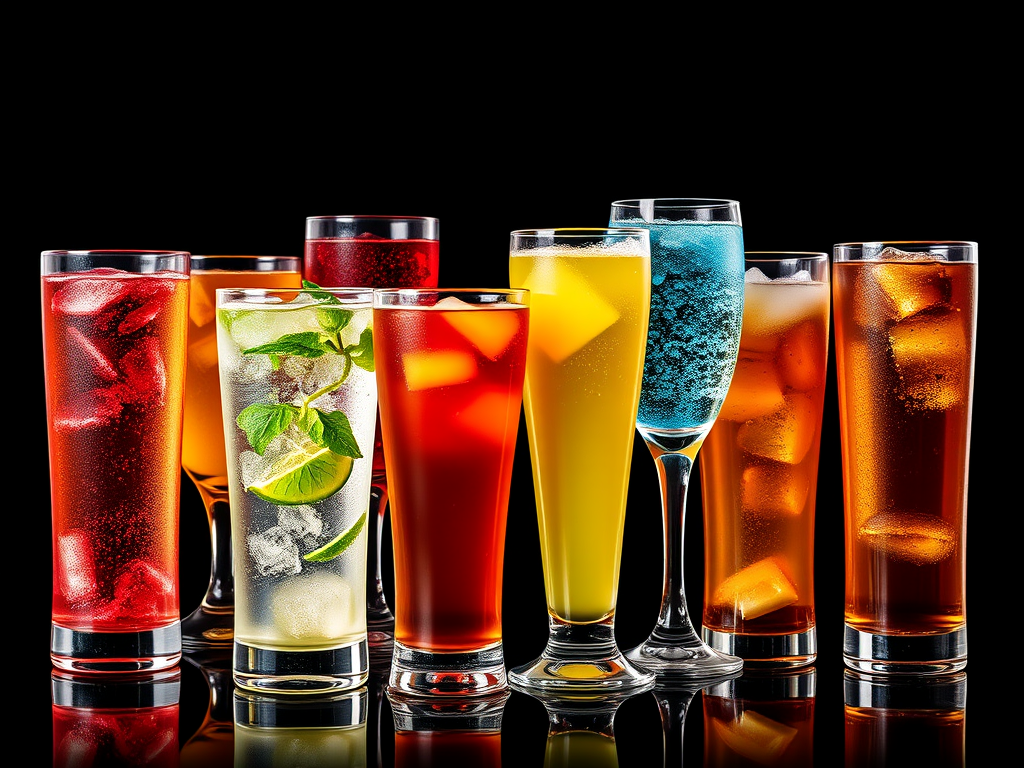
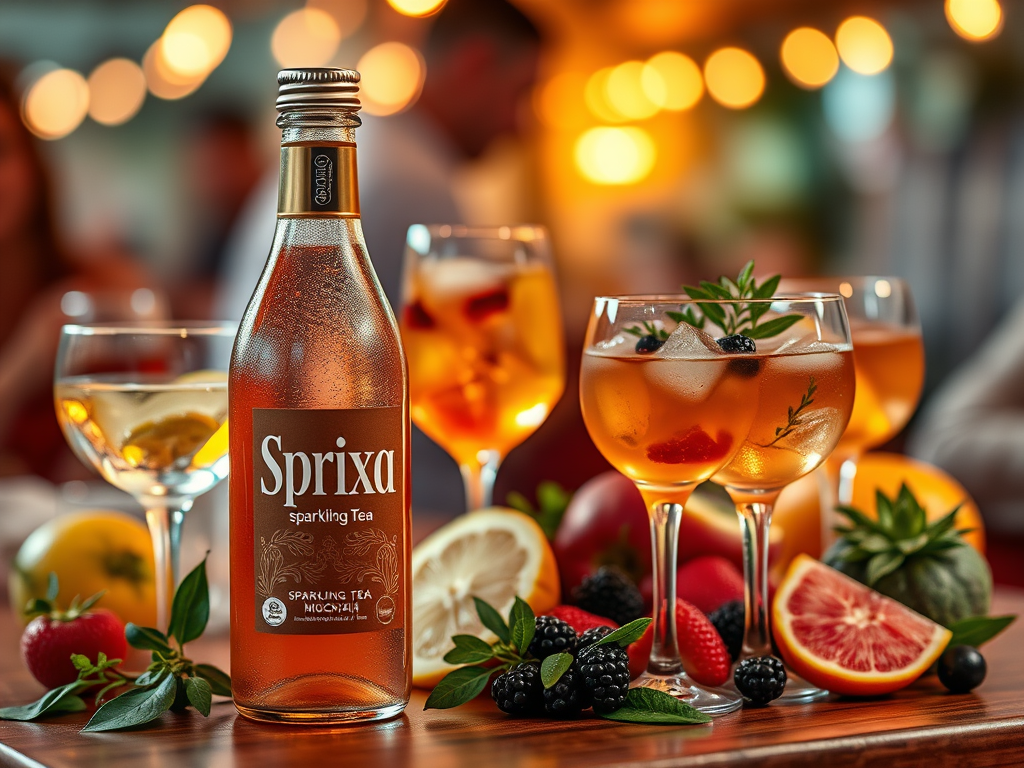
    Sprixa is a RTD sparkling tea, blending functionality with indulgence. This botanical-infused beverage is for consumers seeking a refreshing, non-alcoholic option with premium ingredients and wellness benefits.

    Some of the Key Features and Benefits include:

    • A Premium Sparkling Tea Experience – Using tea as a base infused with sparkling water and botanicals like hibiscus, chamomile, and lemon balm will create a refreshing yet sophisticated flavor.
    • Mocktail-Inspired, Alcohol-Free Alternative – This drink will offer an alternative for alcohol, allowing the consumer to enjoy various social settings.
    • Health-Conscious Ingredients – Sprixa will be naturally sweetened with honey or agave, free from artificial additives, and the use of herbs or natural flavorings providing hydration and antioxidants (Mintel, 2024).
    • Sustainable Packaging & Ethical Sourcing – The teas will be packaged using 100% recyclable glass bottles with aluminum lids, plus fair-trade organic tea sourcing for minimal environmental impact aligning with Pepsi Co.’s sustainability measures (PepsiCo, 2024b).

    By launching Sprixa, PepsiCo can bridge the gap between RTD teas, sparkling waters, and non-alcoholic cocktails, creating a new segment in the functional beverage space.

    Research Objectives and Design

    To ensure a successful launch, data collection and research will focus on key consumer and market insights:

    Research Objectives:

    • Consumer Preferences – Identify the flavor profiles, ingredients, and functional benefits most appealing to Millennials and Gen Z consumers.
    • Market Potential – Evaluate the market size and growth trajectory for non-alcoholic beverages, especially within the RTD tea and mocktail categories.
    • Sustainability Expectations – Assess consumer attitudes toward sustainability and ethical sourcing to inform packaging and ingredient decisions.
    • Brand Perception – Analyze how PepsiCo’s sustainability efforts and product offerings influence consumer trust and purchasing decisions.

    Research Design:

    • Primary Research – Utilize Census data for audience segmentation and surveys to gather quantitative and qualitative insights into consumer behavior.
    • Secondary Research – Leverage market reports from Mintel, IBISWorld, and Statista to analyze trends in the RTD tea and wellness beverage market, along with competitive positioning.

    The Competitive Landscape: How Sprixa Stands Out

    PepsiCo faces competition in the RTD beverage market, but its offerings are distinct. While Pepsi has expanded its portfolio with energy drinks and flavored sparkling beverages, it has yet to introduce a sparkling tea mocktail. Coca-Cola and Monster have already made strides in the RTD tea category, presenting both opportunities and challenges for PepsiCo.

    Coca-Cola: Strengths and Weaknesses

    Google. (2025). Simply Pop [Image]. Retrieved from Google.com

    Coca-Cola holds a strong market presence with popular brands like Gold Peak and Honest Tea, along with newer innovations like Simply Pop, a prebiotic soda designed to support gut health (The Coca-Cola Company, 2025). However, Coca-Cola’s environmental record, particularly its status as the world’s top plastic polluter, presents a significant challenge in today’s eco-conscious market (Dairy News Today, 2025). This lack of commitment to sustainability could put PepsiCo at a competitive advantage, particularly among consumers who prioritize ethical sourcing and sustainability.

    Monster’s Nasty Beast: A Different Target Market

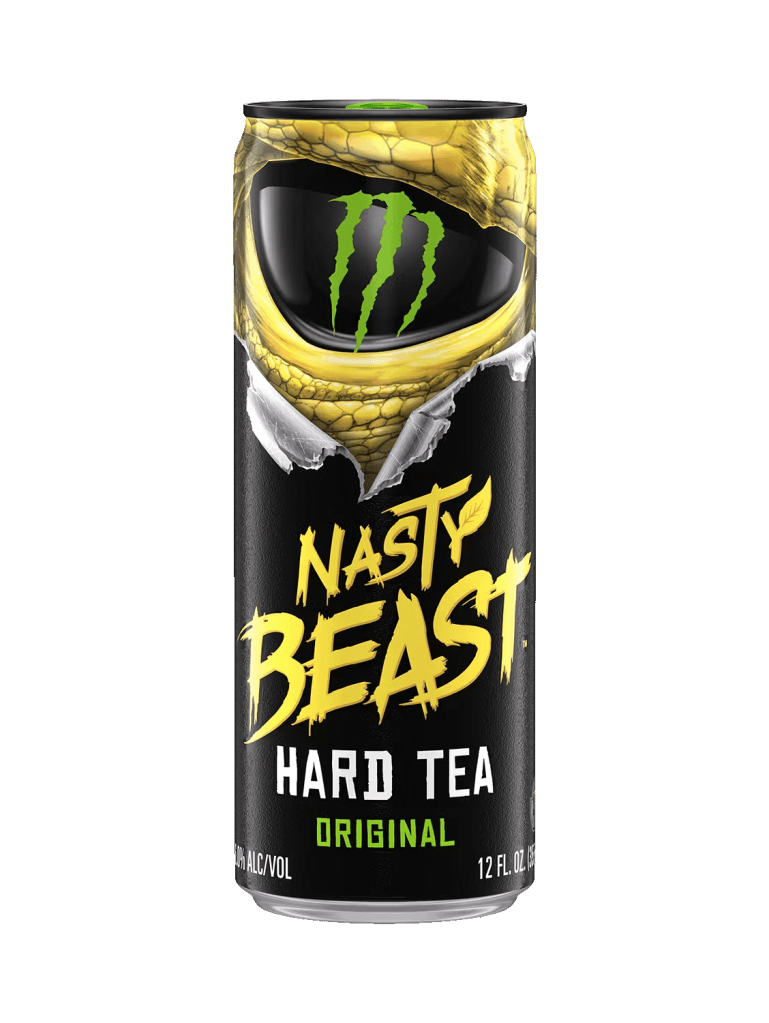
    Google. (2025). Monster Nasty Beast Hard Tea [Image]. Retrieved from Google.com

    Monster’s Nasty Beast Hard Tea targets a different demographic, appealing to consumers looking for a bold, alcoholic tea option (Monster Energy, 2025). While Nasty Beast’s appeal lies in its energy-boosting qualities, Sprixa will focus on wellness, sophistication, and mindful drinking, positioning it as a premium, alcohol-free alternative. This distinction allows Sprixa to capture the growing segment of consumers interested in non-alcoholic beverages for social occasions, a niche not fully addressed by competitors like Monster.

    Other Factors Impacting Sprixa

    Government

    Laws related to labeling and health claims for food and beverages, especially non-alcoholic products, might require Sprixa to adhere to specific guidelines for advertising its health benefits or alcohol-free status.

    Economy

    Economic conditions impact how much consumers are willing to spend. In tough times, people might seek more affordable alternatives, while in better times, they may splurge on premium options like Sprixa. Growing interest in health and moderation could also drive demand for functional drinks (Riebe, 2024).

    Environment

    Environmental factors can play a significant role in shaping consumer preferences. As sustainability becomes a larger concern, consumers are increasingly looking for products that align with their eco-conscious values. Sprixa’s packaging and ingredient sourcing will need to reflect these values, ensuring that it appeals to environmentally-minded consumers (Mintel, 2024).

    Technology

    Digital marketing and e-commerce platforms can provide Sprixa with a powerful way to engage with consumers, especially the younger, more tech-oriented generations. Using consumer insights to tailor Sprixa’s offerings and marketing messages can also enhance consumer engagement.

    Conclusion: A New Era for Non-Alcoholic Beverages

    Sprixa is poised to capitalize on the growing demand for non-alcoholic, functional beverages. By aligning with consumer preferences for health-conscious ingredients, sustainability, and social responsibility, PepsiCo can establish itself as a leader in the evolving wellness beverage market. With the right marketing and research-backed product development, Sprixa has the potential to thrive in a competitive landscape, offering a premium, mindful drinking experience that caters to the modern consumer.

    What are your thoughts on this exciting new concept? Let me know in the comments below!

    References

    Dairy News Today. (2025, February 20). Corporate Climate Goals Under Scrutiny: Coca-Cola, Nestlé, and Unilever Scale Back Sustainability Commitments. Dairynews.today. https://dairynews.today/news/corporate-climate-goals-under-scrutiny-coca-cola-nestl-and-unilever-scale-back-sustainability-commit.html

    Irigoyen, F. (2025, February). Tea Production in the US. Ibisworld.com. https://my.ibisworld.com/us/en/industry/31192b/performance

    Mintel. (2024, June 30). Functional Drinks – US – 2024. Mintel. https://clients-mintel-com.eu1.proxy.openathens.net/report/functional-drinks-us-2024?fromSearch=%3Ffreetext%3Dherbal%2520drinks%26resultPosition%3D12

    Monster Energy. (2025). Green Tea – Nasty Beast Hard Tea | Monster Brewing LLC. Beast Unleashed. https://beastunleashed.com/nasty-beast/green-tea/

    PepsiCo. (2024a). About PepsiCo. Pepsico; Pepsico. https://www.pepsico.com/who-we-are/about-pepsico

    PepsiCo. (2024b). Mission & Vision. PepsiCo. https://www.pepsico.com/who-we-are/mission-and-vision

    Riebe, S. (2024, December 31). Alcohol Alternatives – US – 2024. Mintel. https://clients-mintel-com.eu1.proxy.openathens.net/report/alcohol-alternatives-us-2024?fromSearch=%3Ffilters.category%3D29%26last_filter%3Dcategory%26resultPosition%3D2

    The Coca-Cola Company. (2025). Discover Simply Pop Prebiotic Sodas – Bubbly New Flavors with No Added Sugar! Coca-Cola.com. https://www.coca-cola.com/us/en/brands/simply/products/pop

  • The Coke vs. Pepsi Rivalry: From Traditional Tactics to Praising the Competition

    February 3rd, 2025
    WordPress. (2025). Coke vs. Pepsi. [Image]. In AI Generator.

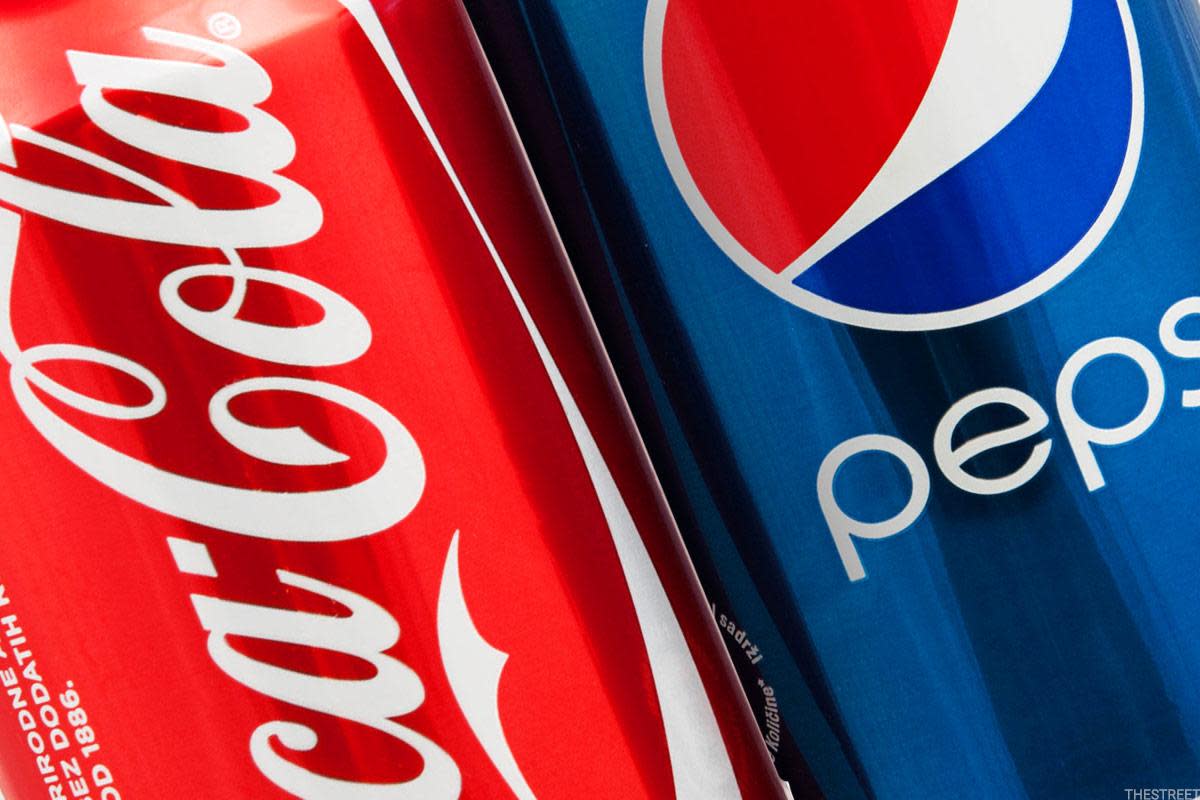
    Coca-Cola and Pepsi have spent over a century battling for supremacy, and even if you do not drink soda, you have probably picked a side. Their rivalry has done more than sell fizzy drinks; it has shaped how companies market their products. But, what if the secret to success lies not in competing, but in complimenting?

    Let us dive in and find out!

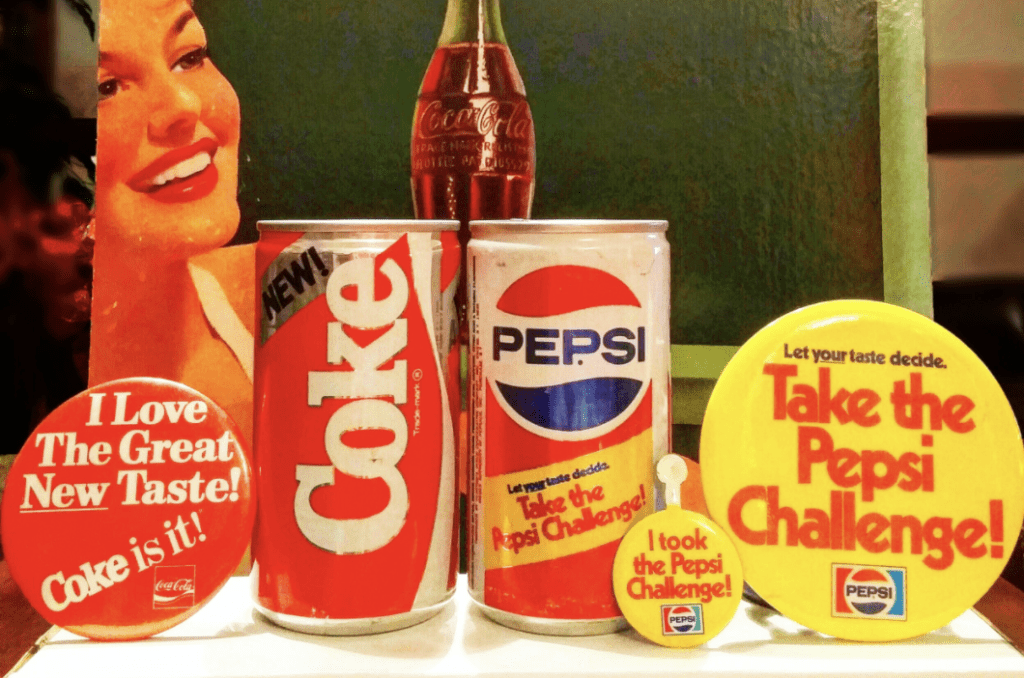
    Doane, M. (2020). Coke vs. Pepsi Challenge [Image]. In Google Images.

    Traditional Rivalry: The Battle for Soda Supremacy

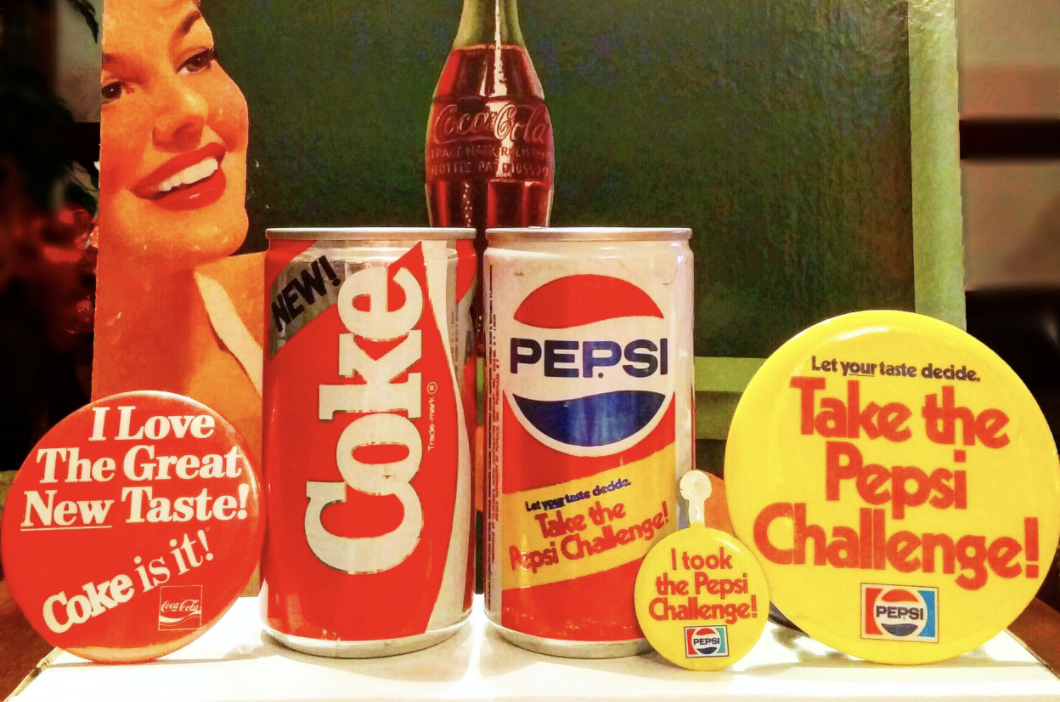
    Coke and Pepsi have been locked in a game of one-upmanship for decades. Think back to the Pepsi Challenge in the 1970s, where Pepsi set up taste tests and claimed most people preferred their soda. Coke’s response? New Coke.

    Spoiler: It flopped.

    However, these kinds of direct attacks made the rivalry legendary.

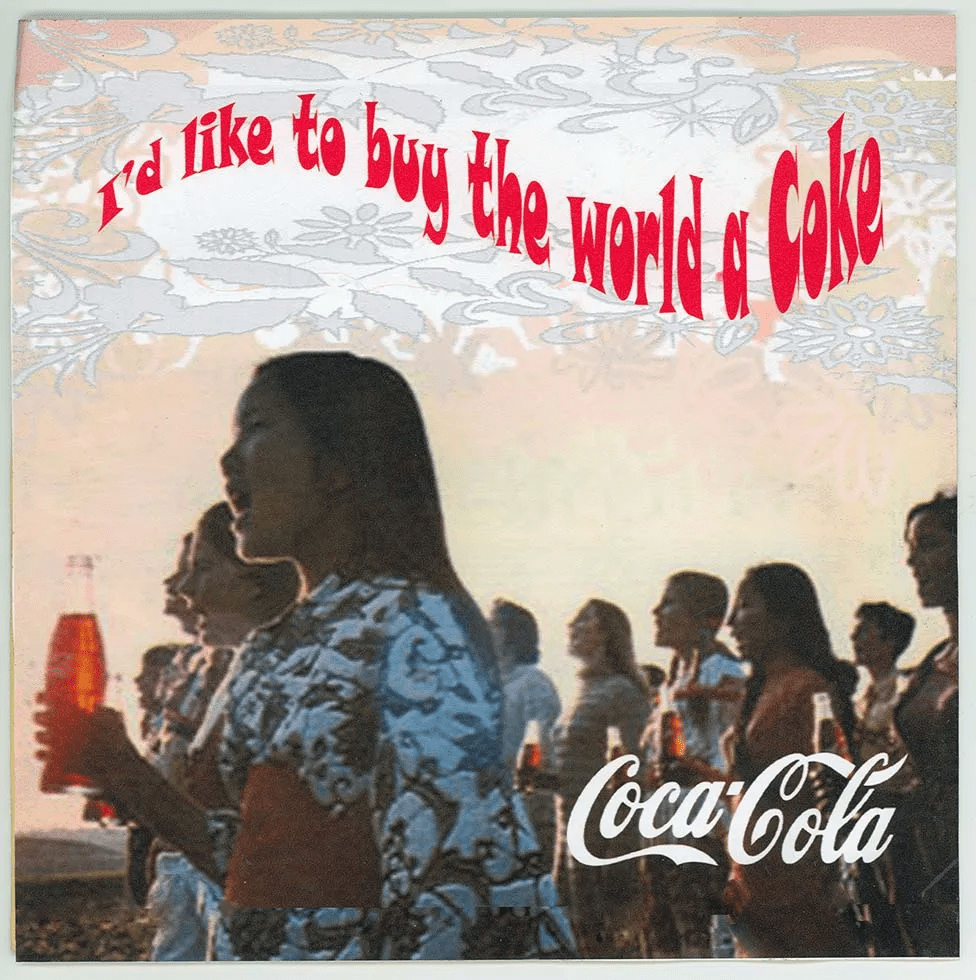
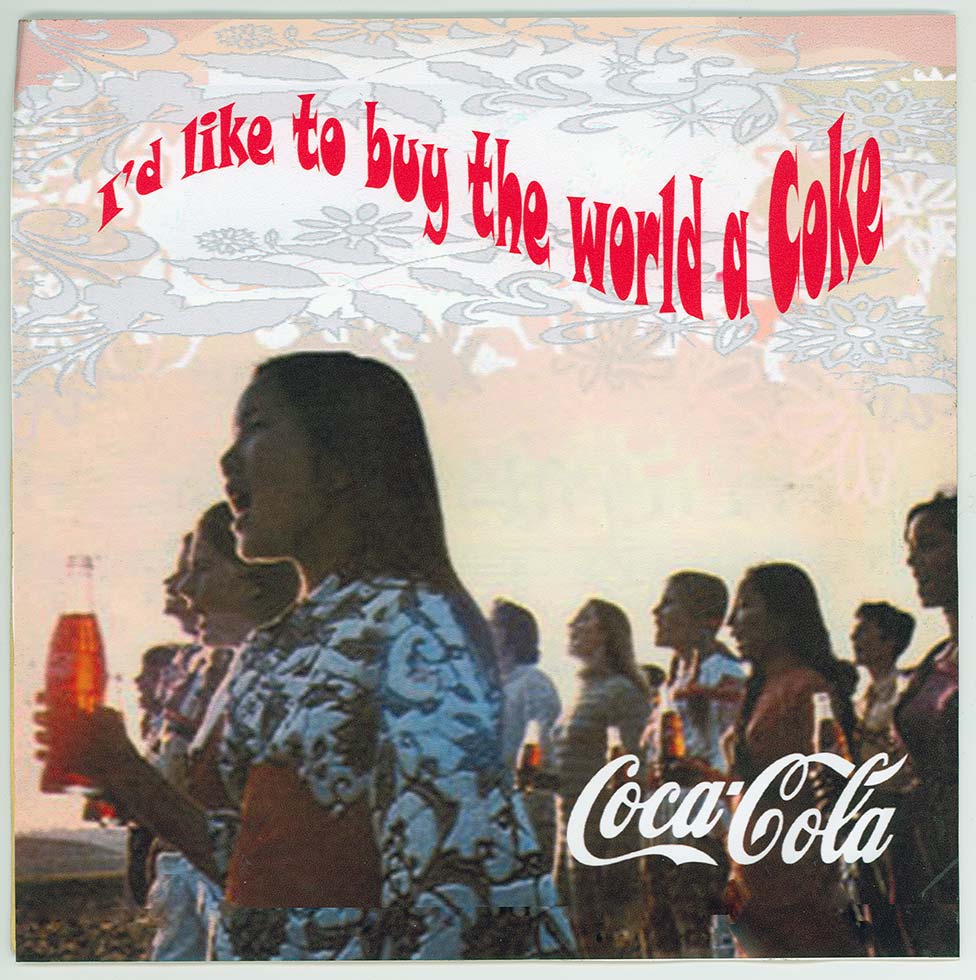
    Pepsi leaned into being the challenger, aligning with youth culture and big moments like the Super Bowl halftime show. As the classic leader, Coke focused on nostalgia and Americana (remember the “I’d like to buy the world a Coke” ad?). This back-and-forth gave each brand a unique identity, forcing consumers to pick a team (Adams, 2022).

    The Coca-Cola Company. (2025). I’d Like to Buy the World a Coke [Image]. In The Coca-Cola Company.

    Traditional rivalry strategies are inherently competitive and appeal to consumers who enjoy the drama of corporate battles. They also reinforce brand differentiation, meaning you know exactly what each brand stands for. However, this approach risks alienating younger and socially conscious consumers who might find such tactics outdated or overly aggressive (Gatesman, 2024).

    Why Try a Different Approach?

    Recently, brands have realized that constant combat might not be the best look, especially in younger generations or when consumers are more socially conscious (Gatesman, 2024).

    Enter: competitor praise.

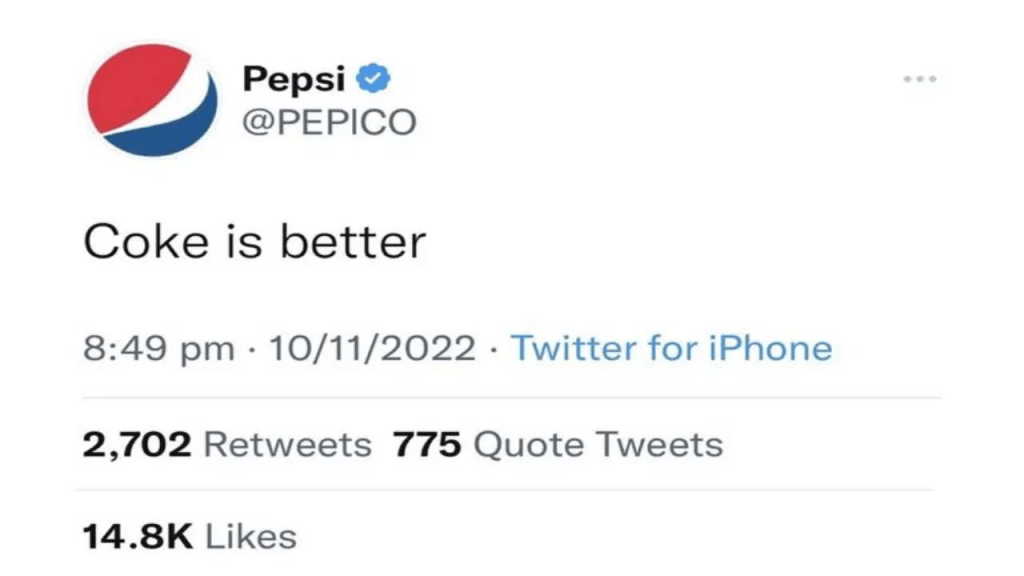
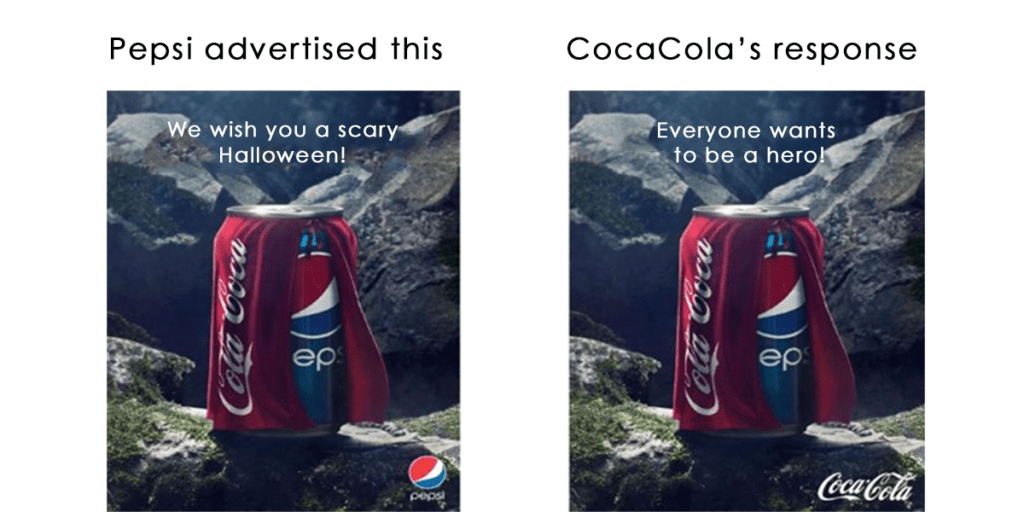
    Instead of tearing each other down, brands sometimes nod to their rivals. For instance, in the past, Coca-Cola acknowledged Pepsi’s win in taste during the cola wars that challenged them to reformulate their product. To modern times, where Pepsi makes a shout out towards Coke, leaving consumers smiling (Adams, 2022; Zhou et al., 2022).

    Google. (2025). Pepsi Tweet [Image]. In Google Images.

    Why does this work?

    It works because it taps into thin-slice theory, which is a fancy way of saying people make quick judgments based on small bits of information (Peracchio & Luna, 2006). When a brand praises a competitor, it comes across as confident and humble, traits we naturally gravitate toward. That positive vibe can boost engagement and drive sales (Zhou et al., 2022).

    Moreover, this strategy appeals to younger audiences who value authenticity over corporate sniping. By acknowledging a rival’s strengths, a brand positions itself as secure and trustworthy, fostering deeper consumer loyalty (Gatesman, 2024).

    When Praising the Competition Pays Off

    Imagine seeing an ad where Coke says, “Pepsi did a great job with that halftime show.” You would probably think, “Wow, that was so nice of them to say!” Considering they are rivals. By acknowledging a rival’s strengths, a brand can position itself as secure and trustworthy. This tactic works particularly well in low-stakes situations where the tone can remain lighthearted.

    For example, when a restaurant recommends a competitor down the street for a dish they do not serve, you trust them more. Similarly, when Coke and Pepsi collaborated on sustainability initiatives like reducing plastic waste, it signaled a shared commitment to a higher cause. These moments of cooperation show that collaboration can sometimes be as powerful as competition (Adams, 2022; Zhou et al., 2022).

    When It Might Backfire

    Of course, praising the competition does not always mean success. A compliment might feel like waving a white flag if you are locked in a fierce battle for market share or dealing with a highly competitive industry. For example, if Pepsi had praised Coke during the New Coke fiasco, it might have been perceived as opportunistic rather than genuine. Moreover, if the praise comes off as fake or self-serving, it can backfire, making consumers roll their eyes instead of reaching for your product. Brands must strike the right balance, ensuring their compliments are timely, genuine, and relevant (Gatesman, 2024; Zhou et al., 2022).

    Finding Balance: Lessons from Coke and Pepsi

    Brands need to strike a balance to appeal to diverse audiences. Traditional rivalry can energize loyalists who love the competition, while moments of praise resonate more with younger generations seeking authenticity and collaboration (Gatesman, 2024). When done right, these approaches can build both trust and excitement.

    Coke and Pepsi are venturing into new territory, addressing significant challenges like sustainability. By joining forces on issues like reducing plastic waste, cooperation sometimes beats competition. However, do not worry. The playful rivalry is not going anywhere. These two will keep finding creative ways to stay in our heads and carts (Adams, 2022).

    Google. (2025a). Halloween Advertisement [Image]. In Google Images.

    The Bottom Line

    Rivalries like Coke and Pepsi are iconic for a reason, but today’s consumers want more than a fight. They respond to brands confident enough to praise their competitors, savvy enough to make it feel genuine, and smart enough to know when to dial it back. Whether through old-school rivalry or unexpected camaraderie, the ultimate goal is the same: win our loyalty and maybe even our hearts.

    References

    Adams, P. (2022, May 3). How Coke and Pepsi’s rivalry shaped marketing — and where it goes next. Marketing Dive. https://www.marketingdive.com/news/coke-vs-pepsi-rivalry-brand-marketing-metaverse/621711/

    Doane, M. (2020). Coke vs. Pepsi Challenge [Image]. In Google Images. https://writinginbound.com/content/images/2020/11/coke-vs-pepsi-challenge-1.png

    Gatesman. (2024, April 26). Purchasing Behavior: Gen Z Reframed. YouTube. https://www.youtube.com/watch?v=Wlek91AUKUw

    Google. (2025a). Halloween Advertisement [Image]. In Google Images.

    Google. (2025b). Pepsi Tweet [Image]. In Google Images.

    Peracchio, L. A., & Luna, D. (2006). The Role of Thin-Slice Judgments in Consumer Psychology. Journal of Consumer Psychology (Taylor & Francis Ltd), 16(1), 25–32. https://doi.org/10.1207/s15327663jcp1601_5

    The Coca-Cola Company. (2025). I’d Like to Buy the World a Coke [Image]. In The Coca-Cola Company. https://www.coca-colacompany.com/content/dam/company/us/en/about-us/history/coca-cola-hilltop-ad.jpg

    The Street. (2025). Coke vs. Pepsi What’s Really the Difference? [Image]. In Google Images. https://www.thestreet.com/.image/t_share/MTY3NTQxNTYyNDAxMTA1ODA2/pepsi-vs-coke-whats-really-the-difference.jpg

    WordPress. (2025). Coke vs. Pepsi. [Image]. In AI Generator.

    Zhou, L., Du, K. M., & Cutright, K. M. (2022). Befriending the Enemy: The Effects of Observing Brand-to-Brand Praise on Consumer Evaluations and Choices. Journal of Marketing, 86(4), 57–72. https://doi.org/10.1177/00222429211053002


  • A Project on Consumer Behavior Analysis

    January 18th, 2025

    Chosen Company: The Coca-Cola Company

    Over the years, Coca-Cola has substantially diversified its product portfolio to meet the evolving consumer demand for healthier alternatives. With a strong commitment to sustainability and innovation, the company has been actively focusing on reducing sugar in its beverages, which aligns with the increasing trend of health-conscious consumers seeking low-sugar or sugar-free options (The Coca-Cola Company, 2024).

    Category Segment Within the Company

    I chose the sugar reduction category, which includes products like Coca-Cola Zero Sugar, Diet Coke, and other low-sugar alternatives. As consumers become more health conscious, Coca-Cola has adapted by reducing sugar content and offering healthier options. This category is growing in importance, reflecting the shifts towards healthier lifestyles, making it an intriguing area to explore for my consumer behavior analysis.

    To conduct my research, I plan to use credible resources such as:

    • Consumer and Market Research Reports will provide insights into consumer behaviors and industry trends, explicitly focusing on sugar reduction and healthy eating trends. 
    • Beverage Industry Analysis Reports detail the industry’s performance, market trends, competitive landscape, and forecasts. They will provide insight into the broader soda market, how it’s evolving, and the impact of health trends on industry players.
    • The Coca-Cola Company’s Annual Sustainability Report: Sugar-Reduction includes details on product innovation, consumer health initiatives, and marketing strategies to promote healthier beverage options. I believe this resource will be crucial in understanding Coca-Cola’s commitment to sugar reduction and aligning its strategy with consumer demand for healthier beverages (Coca-Cola Company, 2024).

    By focusing on Coca-Cola and its sugar reduction efforts, these resources will help me analyze consumer behavior, identify key market trends, and understand Coca-Cola’s strategies to address these changing demands.

    Resources:

    The Coca-Cola Company. (2024). Driving Choice & Reducing Sugar | In Our Products. The Coca-Cola Company. https://www.coca-colacompany.com/sustainability/in-our-products/sugar-reduction

  • Exploring Market Segmentation

    January 15th, 2025
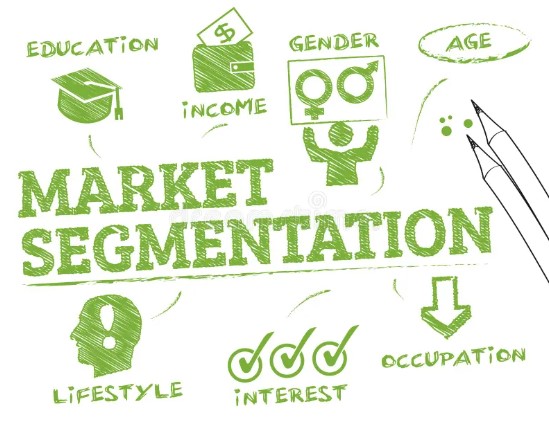
    Dreamstime. (2025). Market Segmentation. In Dreamstime.com

    What exactly is market segmentation? According to Babin and Harris (2021), it is the process of dividing a market into distinct groups of consumers who have unique demand patterns. But before a company can successfully segment its market, it first needs to understand the products or services it offers and the value it brings to consumers. Without a clear value proposition, companies can’t effectively connect with their target audience (Babin & Harris, 2021).

    Now that we have a clearer understanding of market segmentation, let’s examine how it works in the real world.

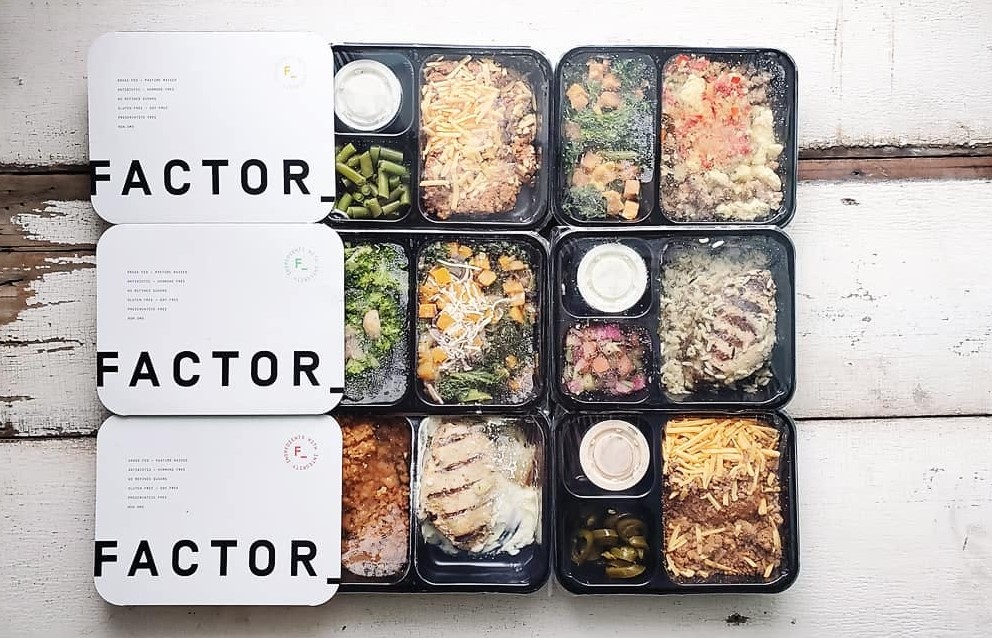
    Not long ago, I decided to try a ready-to-eat meal service from Factor. When I came across an ad for Factor on social media and clicked through to their website, I immediately recognized the value they were offering. Their meal plans, approved by dieticians, and the convenience of ready-to-heat meals really appealed to me.

    And just like that, I saw market segmentation in action! Factor crafted a service and marketing strategy specifically aimed at people like me who seek healthy, low-effort meal options. This made me think about how well Factor understands its market segments and tailors its approach to meet the needs of various consumer groups. Here is what I found!

    Market Segments Identified

    Kessel, S. (2024a). Factor Meals. In summerthedietitian.substack.com.

    Factor (2025) targets several key market segments.

    • Health-Conscious Consumers: Factor caters to individuals focused on health, offering meal plans.
    • Busy Professionals: Factor appeals to professionals who lack the time to cook and offers catering services for business meetings by delivering healthy, ready-to-eat meals.
    • Fitness Enthusiasts: Its meals are easy to find nutritional information on, making it ideal for those who journal their food to meet fitness goals.
    • Individuals with Dietary Restrictions: Factor provides options for people with dietary restrictions, including gluten-free, dairy-free, and vegan meals.

    Now that we have identified these market segments, let us examine some strategies used to reach them.

    Segmentation Strategies

    According to Ladd (2020), market segmentation strategies involve dividing a broad market into smaller, more manageable groups of customers with similar traits. These traits can include geographic, demographic, and psychographic factors, behaviors, usage rates, and benefits sought. Segmenting the market enables companies to tailor their marketing efforts to address the specific needs of each group.

    Looking at the breakdown:

    1. Demographic Segmentation: Factor can segment its audience based on age, income, and family size. For example, young professionals might prioritize convenience, while families might seek a wider variety of meal options to cater to different tastes.
    2. Behavioral Segmentation: Factor can also segment customers based on their purchasing behavior, such as frequency of orders and meal preferences. Regular customers may be offered loyalty rewards, while new customers might receive personalized promotions.
    3. Psychographic Segmentation: This is where value comes into play. Factor focuses on customers who value health and wellness. The company emphasizes the nutritional benefits of each meal, positioning itself as a solution for people seeking a balanced lifestyle without the hassle of meal preparation (Factor, 2025).
    4. Geographic Segmentation: Factor can use this segment to narrow down and focus its efforts on more health-conscious regions, such as urban vs. suburban vs. rural.

    Considering these segmentation strategies, companies should remember several essential principles when implementing segmentation efforts to ensure success.

    Key Points to Remember When Implementing Segmentation Strategies

    • Focus on High-Value Customers: Applying the 80/20 rule reveals that 20% of consumers often generate the majority of revenue. Targeting this consumer segment can lead to better results (Ladd, 2020).
    • Use Data for Personalization: Collecting and using customer data to personalize experiences ensures that businesses meet customers’ unique needs (Ladd, 2020).
    • Maintain Consistent Quality: Offering high-quality products or services helps build trust and customer loyalty (Babin & Harris, 2021).
    • Be Flexible and Adapt: To stay relevant, regularly review and adjust strategies based on data and customer feedback (Babin & Harris, 2021).

    As the market for eco-conscious products continues to grow, it presents a new opportunity for companies like Factor to expand their reach. One such emerging segment is the sustainable shopper.

    A New Market Segment: The Sustainable Shopper

    In my recent online shopping experiences, I have noticed an increasing demand for environmentally conscious and sustainable brands. Consumers are becoming more focused on eco-friendly and ethical products, a trend that shows no signs of slowing down. Many customers now seek companies that align with their values, particularly concerning sustainability and reducing food waste (Gharib, 2024).

    Creating a Segmentation Strategy for the Sustainable Shopper

    Pinterest. (2024). Sustainable Shopper. In Pinterest.com

    Factor is already making strides with implementing recyclable materials into their shipping. However, to tap further into this growing market segment, Factor could develop a strategy with the following steps:

    • Promote Eco-Friendly Sourcing: Consumers who prioritize sustainability would be attracted to Factor’s sourcing practices. The company could highlight using locally sourced, organic, and ethically grown ingredients in its marketing materials.
    • Form Partnerships with Sustainable Brands: Collaborating with eco-friendly brands or organizations would help Factor build credibility within the sustainable shopper segment.

    As sustainability becomes a higher priority for consumers, Factor can build on its existing segmentation strategies by embracing eco-friendly practices. This shift could not only align the brand with consumer values but also position Factor as a leader in the emerging market for sustainable meal services.

    Conclusion

    Factor was my example of how a company can implement effective market segmentation strategies to meet diverse customer needs. By focusing on demographic, behavioral, psychographic, and geographic segments, Factor can ensure that its meal plans resonate with the right audiences, myself included. Looking ahead, Factor has the opportunity to expand the growing eco-conscious consumer segment. By adopting sustainable practices such as eco-friendly packaging and sourcing, Factor can attract environmentally minded shoppers and further enhance its brand.

    References

    Babin, B. J., & Harris, E. (2021). CB (9th ed.). Cengage Learning US. https://mbsdirect.vitalsource.com/books/9798214339405

    Dreamstime. (2025). Market Segmentation [Image]. In Dreamstime.com

    Factor. (2025, January 5). Factor. https://www.factor75.com/

    Gharib, P. (2024, February 4). Meal kit market: Size, delivery services, and opportunities. ProfileTree Web Design and Digital Marketing. https://profiletree.com/meal-kit-market-size-delivery/

    Kessel, S. (2024a). Factor Meals [Image]. In summerthedietitian.substack.com.

    Ladd, D. (2020, August 20). Marketing: Customer segmentation. Maximize your marketing efforts through segmentation. LinkedIn Learning. https://www.linkedin.com/learning/marketing-customer-segmentation/maximize-your-marketing-efforts-through-segmentation?u=2106393

    Pinterest. (2024). Sustainable Shopper [Image]. In Pinterest.com

  • Navigating Ethical Waters in Integrated Marketing Communications

    June 20th, 2024

    Embarking on a marketing career is a thrilling adventure, brimming with creativity, strategic planning, and the molding of consumer behavior. However, it’s crucial to underscore the significance of adhering to ethical guidelines, particularly in the realm of integrated marketing communications (IMC). As a newcomer, your commitment to the ethical standards set by the American Marketing Association (AMA) will safeguard your reputation and lay the groundwork for establishing trust with your audience.

    In the realm of integrated marketing campaigns, the role of transparency is not just important, it’s crucial. It’s paramount to ensure that all marketing messages are not only truthful but also steer clear of any misleading information about products or services. For instance, when promoting a medication, it’s essential to be forthright about both its benefits and potential side effects. The importance of transparency is equally emphasized in partnerships and sponsorships, particularly in influencer marketing. The disclosure of financial arrangements is crucial in maintaining credibility with your audience.

    Respecting consumer privacy is a cornerstone of ethical marketing. It’s imperative to handle customer data with the utmost care, only collecting necessary information and always obtaining explicit consent. Adhering to data protection regulations is a legal requirement and a means to foster consumer trust. Equally important is respecting your audience’s privacy preferences by refraining from intrusive marketing tactics like excessive retargeting or unsolicited emails. By respecting these boundaries, you demonstrate your commitment to ethical practices and enhance customer loyalty.

    Social responsibility is integral to ethical marketing. Cultural sensitivity is crucial — be mindful of cultural differences and avoid stereotypes or offensive messaging in global campaigns. Considering local customs and values can prevent misunderstandings and build positive brand perception worldwide. Furthermore, integrate environmental considerations into your marketing strategies by promoting sustainability. Whether through eco-friendly materials or supporting environmental causes, aligning with social and environmental values resonates positively with conscientious consumers.

    Emphasizing fairness and equality boosts your brand’s ethical reputation. When carrying out marketing activities, be inclusive by featuring a wide range of individuals and steering clear of damaging stereotypes. In competitive settings, practice fairness by emphasizing your strengths without unfairly criticizing your competitors. Healthy competition nurtures a positive industry atmosphere and demonstrates your dedication to ethical behavior.

    Failure to uphold these ethical standards can lead to significant repercussions. It erodes consumer trust, as in cases where companies misled consumers or mishandled sensitive data, resulting in financial penalties and damaged reputations. Ethical lapses also invite legal consequences, such as fines for data privacy violations or negative publicity stemming from campaigns that offend or mislead audiences. Internally, unethical practices can create a toxic work environment, leading to high turnover and diminished productivity. The potential harm from unethical marketing practices is clear, underscoring the importance of adhering to ethical guidelines.

    In conclusion, it is essential to prioritize integrity in all your marketing efforts. Upholding ethical standards not only safeguards your reputation but also helps build long-lasting relationships with your audience based on trust and respect. By embracing transparency, respecting privacy, promoting social responsibility, and ensuring fairness, you will establish a solid foundation for ethical marketing practices. Ultimately, this will lead to long-term success in the dynamic field of integrated marketing communications.

    References

    American Marketing Association. (2021). AMA statement of ethics. American Marketing Association. https://www.ama.org/ama-statement-of-ethics/

    Cohen, G. (2024, January 2). Morals Meet Market: Ethical Decision-Making in Marketing. Marketing Career Insights. https://marketingcareerinsights.com/ethical-marketing-decisions/#:~:text=When%20a%20company%20engages%20in%20false%20advertising%2C%20it

    Martinez, V. (2024, May 23). Ethical marketing: Building trust and consumer engagement in the digital age. FutureB2B. https://www.futureb2b.com/resources/ethical-marketing-building-trust-and-consumer-engagement-in-the-digital-age/#:~:text=Unethical%20marketing%20practices%20not%20only%20tarnish%20a%20brand%E2%80%99s

  • The Rise of Influencer Marketing: A New Era in Advertising

    June 10th, 2024

    Image by: Canva

    Have you ever found yourself scrolling through a social media app and being captivated by a familiar or new creator raving about a product or service that entices you to learn more about it? That is the power of influencer marketing! Influencer marketing is not just a trend; it is a game-changer in the digital world, revolutionizing how brands and consumers interact. This innovative approach harnesses the authenticity ​and popularity of social media​ personalities to endorse products and ​services to a​ vast audience, directly influencing consumer behavior.  

    As a millennial I grew up in the realm of Myspace where I followed my first beauty influencer Jeffree Star. Then, YouTube came around and other Influencers such as Niki Tutorials, Manny MUA, and Laura Lee emerged. Today, one of the newer influencers that I follow is Mikayla Nogueira who began her journey in the beauty industry on TikTok. These influencers have not only amassed huge followings but also harnessed their influence to collaborate with brands and share beauty products they genuinely believe in with their loyal fans. This empowerment of influencers in the marketing process is a testament to the transformative power of influencer marketing. 

    However, influencers are not just content creators; they are trusted intermediaries, bridging the gap between companies and consumers. They employ various strategies, such as sponsored content, product placements, and endorsements, seamlessly integrating promotional material into their engaging and relatable content. What is truly remarkable about influencer marketing is its power ​to connect​ brands with their target audiences ​in a more​ personal ​and authentic way​. By partnering ​with influencers whose​ ​values and interests align with their​ own, companies ​can effectively reach​ and engage with potential customers, driving sales and fostering brand loyalty. This personal connection is what makes influencer marketing so powerful and effective. 

    Of course, with major influence comes great responsibility. Transparency is not just a buzzword in influencer marketing, it is a fundamental principle. Influencers must be upfront about their brand partnerships, ensuring ​their audience is​ fully ​aware of any​ sponsored content. This commitment to transparency is crucial to maintaining trust and credibility, and it is a key aspect of influencer marketing that sets it apart from other advertising strategies. 

    Despite these challenges, influencer marketing continues to gain momentum as a viable advertising strategy. At its core, it is all about fun, authenticity, and connection. It is like having a conversation with a friend who is recommending their favorite new skincare routine or must-have make-up pallet. ​If your favorite influencer approves, then you know that it is a great product as you trust their judgement. With the rise of social media platforms​ ​like Instagram, YouTube, and TikTok, influencers have​ unparalleled access to millions of users worldwide, ​making them valuable assets for brands seeking to​ expand their reach and influence. 

    So, whether you are a brand looking to reach new audiences or a consumer looking for honest recommendations, influencer marketing has something for everyone. It is a win-win for brands, influencers, and consumers, creating a more engaging and personal way to discover and share awesome products in the digital age. So, the next time you see your favorite influencer sharing their latest obsession, give it a try! Who knows, it might just become your new favorite thing, too!  

    ​​References​ 

    ​​Mathew, J. (2018, July 30). Understanding Influencer Marketing and Why It Is So​ ​Effective. Forbes. https://www.forbes.com/sites/theyec/2018/07/30/understanding-​​influencer-marketing-and-why-it-is-so-effective​/ 

    ​​Whitaker, B. (2016, October 23). The Influencers​. http://Www.cbsnews.com. ​https://www.cbsnews.com/news/60-minutes-kim-kardashian-logan-paul-social-media-​influencers/

  • Empathy in Action: How Tampa International Airport’s Lost Tiger Story Captivated the World

    May 28th, 2024

    In a world of airport hustle, Tampa International Airport stands out with a heartwarming tale of a lost stuffed tiger and an airport manager’s extraordinary efforts to make a difference. A story that went viral, touching millions worldwide and highlighting the power of empathy and compassion.

    Let’s dive into how this moment captured consumers and brought the brand’s extraordinary customer service to the forefront.

    Image by: Hillsborough County Aviation Authority. Published in The Shorty Awards

    The story

     It all began when a little boy accidentally left behind his toy tiger in Tampa International Airport’s play area. It was later found and brought to the operations manager who had a special idea to take the tiger on a journey around the airport. The manager photographed it in various places, such as on a luggage cart, with airport crew and landmarks. With this, a storyline was created to go with the photos, which eventually turned into a book and was given back to the family. The story shortly after went viral, not only highlighting the airport’s commitment to its customer service but also touching the hearts of millions worldwide with its empathy and compassion.

    How was this gesture a success for Tampa International Airport and its brand?

    Tampa International Airport took advantage of this opportunity to showcase the extraordinary efforts of its employees in providing exceptional customer service meeting the wants and needs of their audience. The airport went above and beyond by demonstrating genuine and heartwarming customer care, which deeply resonated with people who value authentic connections and acts of kindness. By sharing this incident, the airport reaffirmed its dedication to exceptional customer service, striking a chord with local travelers and a wider audience interested in heartwarming stories.

    By maintaining a personal narrative and allowing staff and the boy’s family to share their experiences, they successfully built an emotional bond with their audience, leading to positive attitudes toward the airport brand. They used social media platforms such as Facebook and X (formerly known as Twitter) not just as a tool for sharing the story but as a way to include their audience in the narrative. They provided real-time updates and responded to audience feedback, making them feel part of the heartwarming journey, adding to the social and consumer experience.

    The airport effectively managed followers on digital platforms by engaging in discussions and fostering conversations about the story. They responded to comments, shared updates, and showed appreciation for the support and feedback from their followers. By keeping the communication open and genuine, they nurtured a positive connection with their audience and leveraged the excitement generated by the viral story.

    The airport successfully shared the story and engaged with its audience. However, there are always opportunities for improvement. One area for enhancement could involve implementing a comprehensive social media listening and monitoring strategy. Proactively tracking mentions, reactions, and trends related to the story could have helped the airport better manage the influx of engagement and identify opportunities for further response. Additionally, streamlining the process for sharing updates and coordinating responses across social media platforms could have improved efficiency in managing digital media followers and maximizing the story’s impact.

    Today’s Outlook

    Tampa International Airport is well-known for its exceptional customer service and commitment to engaging with travelers. Their ethical use of social media plays a key role in building trust, authentic relationships, and positive brand perception. The airport’s dedication to providing outstanding customer service is evident in initiatives like the Lost Tiger story, where they went above and beyond for travelers. By prioritizing customer needs and experiences, the airport creates positive and memorable experiences, fostering loyalty and satisfaction among travelers. A few examples can be witnessed with their Facebook account, where they hold different events, one being for local artists and another with dancers in honor of May’s Asian American and Pacific Islander month. They have also introduced a mobile application to meet consumer needs, offering convenience and efficiency during travel. The app includes features such as real-time flight information, terminal maps, parking availability, dining options, and airport amenities. By providing these functionalities, the app streamlines the travel process, enhances the overall airport experience, and meets the evolving needs of modern travelers who rely on mobile technology for convenience and accessibility.

    Have you had any heartwarming experiences while traveling? Feel free to share your stories and let us know how the airport or any other travel service has made a positive impact on your journey. Your feedback and experiences are valuable and can inspire others as well!

    Reference

    Hillsborough County Aviation Authority. (n.d.). Tale of tiger’s big adventure highlights airport’s commitment to customer service – The Shorty Awards. Shortyawards.com. Retrieved May 28, 2024, from https://shortyawards.com/8th/boy-leaves-stuffed-tiger-at-tpa-returns-to-a-tale-of-tigers-big-adventure-see-more-at-httpww

  • Unveiling the Secrets to SMART Goals and Effective Marketing Tactics

    May 20th, 2024

    Have you ever wondered what sets successful businesses apart from the rest? Today, I want to introduce you to a powerful tool that can make a significant difference in your marketing strategies-SMART goals. Let’s explore the key difference between goals, strategies, and tactics and how SMART goals play a crucial role in achieving success. Uncover the secrets to effective planning and execution that marketing campaigns use that can propel your business to new heights!

    Image by Canva

    Goals, Strategies, and Tactics

    Marketing campaigns use goals, strategies, and tactics to help drive a business toward success. But what are these?

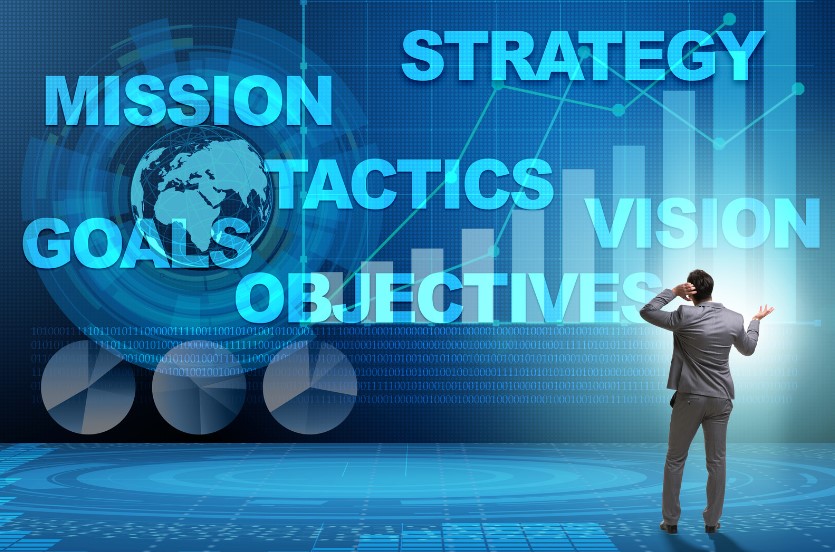
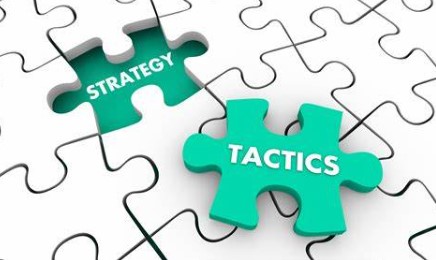
    In simple terms, goals are the broad objectives you aim to achieve, while strategies are the methods or approaches you use to accomplish those goals. In contrast, tactics refer to the specific actions or maneuvers you take to implement the strategy and ultimately achieve the goal (Grinnell, 2020). However, not every goal is the right objective for a business to focus on when it comes to marketing campaigns. So, how do we decide which goals are best? The answer is by making them SMART!

    Image by Canva

    SMART Goals

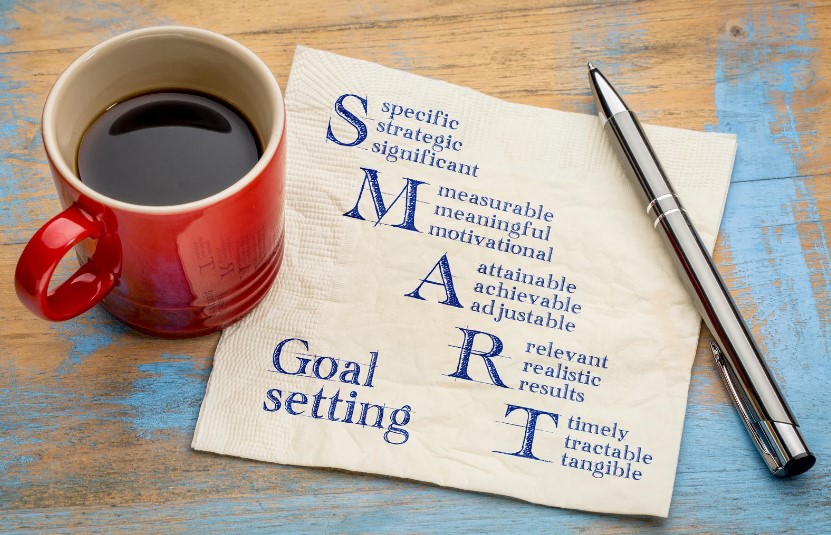
    The SMART goals framework, an acronym for Specific, Measurable, Achievable, Relevant, and Time-based is a structured approach for planning and executing successful marketing campaigns.

    Let’s break it down!

    Setting SMART goals offers a clear and specific direction for the campaign, ensuring that goals are measurable (think metrics), achievable (realistic), and relevant (aligns with your campaign). To further clarify, these other steps once you find your specific goals help in tracking progress and evaluating the campaign’s success while also encouraging actionable steps to meet the campaign’s objectives in a timely manner (Herrity, 2023).

    So, how do we get started?

    The first and most important step in setting SMART goals is your role in being specific. Your specificity allows for better planning and implementation for the rest of the SMART framework. Herrity (2023) references a few questions to consider helping you make your objectives more specific when setting your primary goal.

    • What is my objective?
    • Will reaching this goal make a significant difference?
    • What steps will I have to take?

    Image by Google

    Marketing Tactics and Strategies

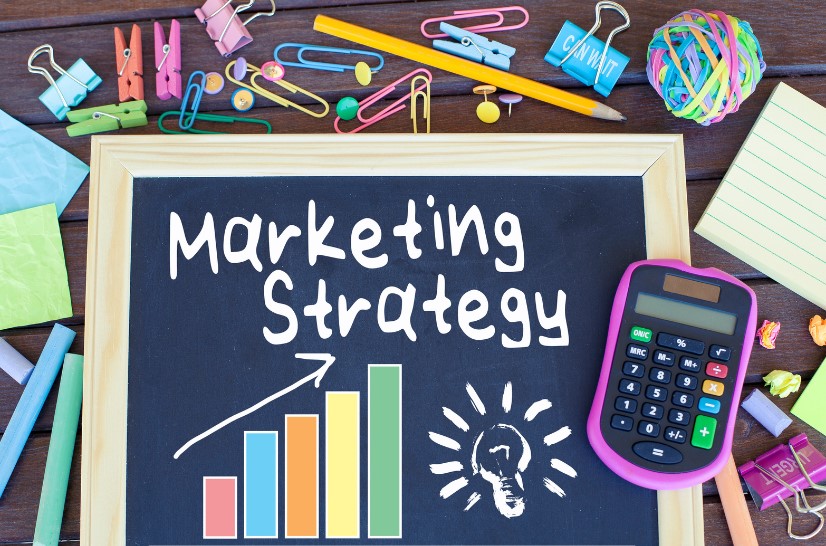
    Now that we understand the differences between goals, strategies, and tactics and the beginning stage for developing a SMART goal, let us dig a little deeper into Tactics and Strategies. Marketing tactics should match overall strategies. To recall, marketing tactics refer to specific concepts and methods a company uses as part of a broader marketing strategy. They are customized to the objectives of a marketing campaign.

    These objectives may include:

    • increasing brand awareness
    • gaining new customers
    • enhancing lead generation
    • improving sales conversion rates
    • launching an e-commerce platform.

    But what is the most effective way to achieve your marketing objectives through tactics and strategies?

    Image by Canva

    Aligning Tactics to Strategies

    Effective marketing tactics are closely aligned with specific objectives. let us look at this with an example. Say your company aims to gain brand awareness among a younger generation.

    Goal: To increase 20% brand awareness by capturing younger generations before the end of the 2024 fiscal year.

    Strategy: Create consistent and interesting content that appeals to younger audiences.

    Tactics: Work with popular influencers favored by young people or to allocate their online marketing budget towards advertising on platforms like Instagram and Snapchat, which young people often use.

    Aligning your tactics with your strategy helps maintain relevance to your company’s primary goal of achieving brand awareness among a specific generation (Master Class, 2022).

    Image by Canva

    Key Performance Indicators (KPIs)

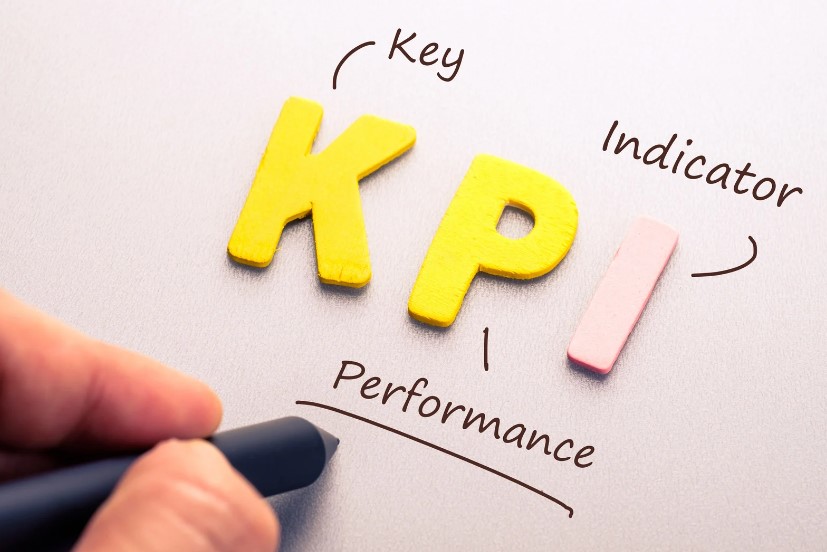
    Key Performance Indicators, known as KPIs provide quantifiable measures to assess the effectiveness of efforts and track the impact of marketing tactics aligned to marketing strategies. Using the example, If the goal is to increase brand awareness to younger generations, the KPIs that could be used to measure the progress and success of this goal may include metrics such as: brand mentions in social media, website traffic, social media engagement (likes, shares, comments), search engine ranking and visibility, and the reach of advertising campaigns targeting the desired audience (Klipfolio, 2019).

    Conclusion

    Understanding the difference between goals, strategies, and tactics and implementing SMART goals can significantly impact your business’s success. By aligning marketing tactics with specific objectives and tracking key performance indicators, you can ensure that your marketing efforts are effective and contribute to achieving your overall business goals. Are you ready to take your business to new heights by setting SMART goals and refining your marketing tactics?

    References

    Grinnell, C. (2020, August 31). Council Post: From Strategy To Action: Five Tips For Smarter Marketing. Forbes. https://www.forbes.com/sites/forbesagencycouncil/2020/08/31/from-strategy-to-action-five-tips-for-smarter-marketing/?sh=44a1e92268c8

    Herrity, J. (2023, July 10). How to Write SMART Goals (With Examples). Indeed. https://www.indeed.com/career-advice/career-development/how-to-write-smart-goals

    Klipfolio. (2019). Marketing Metrics. Klipfolio.com. https://www.klipfolio.com/resources/kpi-examples/marketing

    MasterClass. (2022, April 27). 12 Marketing Tactics: How to Use Effective Marketing Tactics. http://Www.Masterclass.com. https://www.masterclass.com/articles/marketing-tactics

  • The Daily Life with Social Media

    May 10th, 2024

    Every morning, I wake up bright and early at seven, and the first thing I do is grab my phone and tune into my beloved Twitch streaming app. As a passionate fan and participant in the chat, I enjoy the live content of my favorite creators. Discord is another app I open to check for daily announcements and connect with others and the streamers before tuning in. It is always a great way to jumpstart my mornings.

    Of course, I’m not just a one-app person, so I am unsatisfied with a single outlet for all my daily browsing. I’m a social media butterfly who flits from one platform to another throughout the day. My daily digital haunts include Facebook when I want to see what my family is up to. Instagram for when I need inspiration for upcoming projects.  I’ll check into X, formerly known as Twitter, for up-to-date news and what’s happening in the world. If my Twitch streamers aren’t available, I will scroll through TikTok or YouTube. However, out of all of these platforms, if I had to choose just one, it would be Twitch. Why, you ask? Because the engagement with followers is unparalleled, and the content is catered to my interests, providing me with more autonomy when choosing what I want to watch or be exposed to.

    Now, I’m not going to lie; social media isn’t perfect. Sometimes, I’ll come across content that doesn’t interest me, and other times, I’ll stumble upon something that violates the site’s policies. Still, I try to take the good with the bad and focus on the positive aspects of social media.

    When it comes to shopping, I’m all about those discounts! I get bombarded with newsletters and notifications from almost every site I shop with or visit, but I tend to ignore most of them. The ones that catch my eye are the ones that offer cost savings on items I use daily or new product launches from my favorite brands. With new advances in search engines and algorithms, I am more likely to click on suggested ads or content based on the data collected from my searches or past purchases.

    As a millennial born in 1989, I’ve seen the world of advertising evolve throughout the years. I’ve watched it shift from newspapers and television to social media, with interactive ads encouraging feedback and engagement. Now, I’m all about relatable, direct messages that don’t feel like a sales pitch, which I think is the new focus of digital marketing today.

Blog at WordPress.com.


Loading Comments...
 

    • Subscribe Subscribed
      • Megs Topic
      • Already have a WordPress.com account? Log in now.
      • Megs Topic
      • Subscribe Subscribed
      • Sign up
      • Log in
      • Report this content
      • View site in Reader
      • Manage subscriptions
      • Collapse this bar